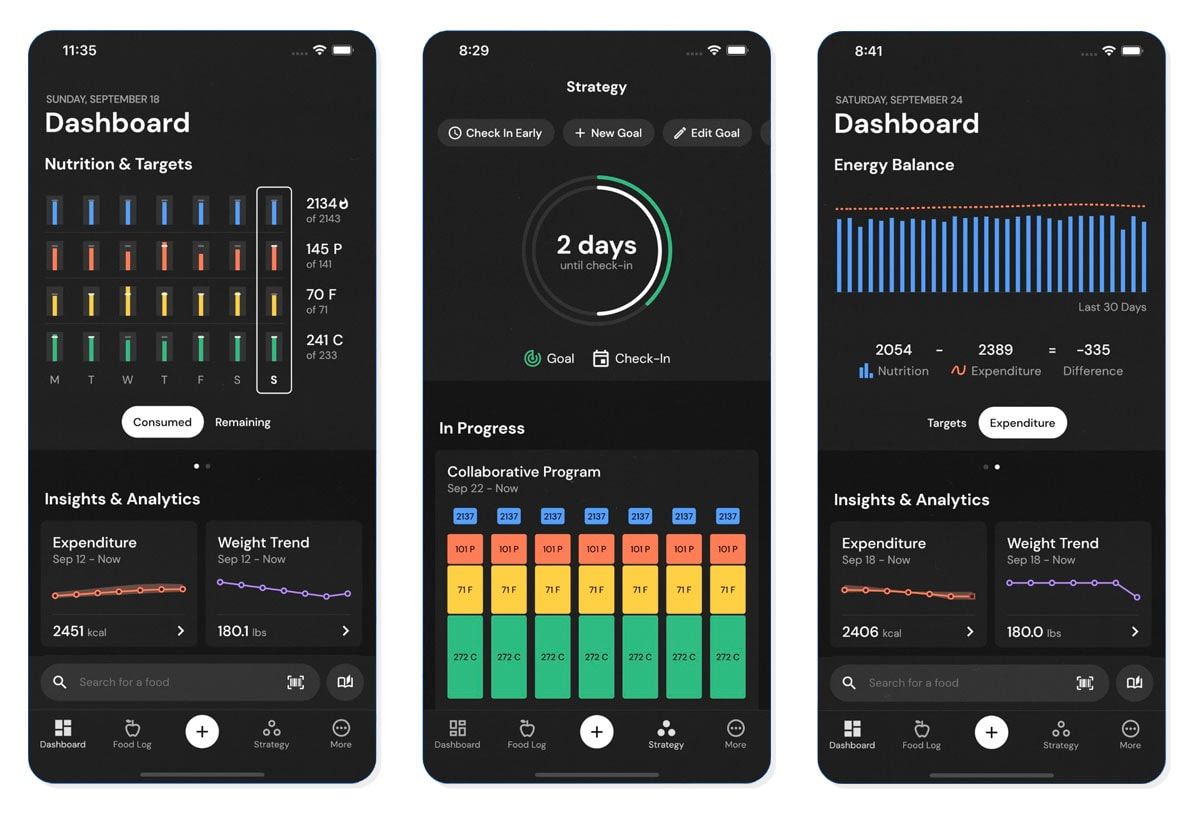



Tracking macros can feel overwhelming, especially if you’re new to it. With all the available apps, calculators, and diets, figuring out exactly where to start can be challenging. You may have encountered the RP Diet and MacroFactor if you seek guidance. Both approaches help users track macros and meet their health and fitness goals. But which is better? This article will discuss the specifics of MacroFactor vs. RP Diet to help you find the most effective, How to Hit Your Macros and easy-to-use nutrition app to achieve your fitness and body composition goals confidently and consistently.Goldi AI’s calorie tracker is a powerful, user-friendly tool for supporting your health goals. Its intuitive design keeps you focused, organized, and consistent.
What is MacroFactor?

MacroFactor is a customizable macro-tracking app with many features that make progress tracking, food logging, and finding accurate nutritional targets (calories, macros, and micros) easy. The app asks about your body composition, goals, and preferences to provide initial calorie and macronutrient targets.
MacroFactor continues to gather relevant data about diet adherence and changes in body weight to update your calorie and macro targets when necessary. Users check in once a week, and the app analyzes the data to determine whether the dietary targets need to be adjusted.
Adaptive Tracking
What’s excellent about MacroFactor is that it follows an ‘adherence-neutral’ approach, which means the app doesn’t shame or punish users for not hitting their macro targets perfectly. It makes adjustments based on what you prove you’re capable of.
Advanced Features
Experienced macro-trackers who deeply understand their needs can use the app’s manual mode and change their nutritional targets as they see fit. MacroFactor also has an extensive and accurate food database. The entries have in-depth nutritional breakdowns, including:
- Information on fiber content
- Vitamins and minerals
- Amino acid composition of protein sources and many more
This much detail is unnecessary for everyone, but it could be helpful for some. For instance, someone on a vegan or plant-based diet would need to be more intentional with protein sources to get enough of each essential amino acid to encourage muscle recovery and growth.
The Good Stuff About MacroFactor
MacroFactor has a lot going for it. For starters, it has an extensive food database with in-depth nutritional breakdowns. It continually updates dietary targets based on the data the user inputs. Users can log their foods simply (e.g., AI describe, barcode scanner).
The interface is simple and designed to encourage consistency. It has many customization options and allows users to track various essential metrics.
The Downsides of MacroFactor
Before starting with MacroFactor, you should be aware of a few downsides. First, there is no free version (only a 7-day free trial), but you can get 14 days free with the code below.
What is RP Diet?

The RP Diet app is Renaissance Periodization’s science-based approach to meal tracking. It combines scientific findings with macronutrient balance and meal timing to deliver sound dietary advice, mainly geared toward strength and physique athletes. That said, while the app is designed to help people eat by their goals, it doesn’t allow users to track their calorie intake, which is odd.
Limited Macro Tracking
You can only track your macros. The app is more of a coaching tool that gives users specific recommendations for when and what to eat based on their workout timing, but there is no option to log calories. Even more interesting is that the app doesn’t count all macros from each food.
For example, if the user logs two slices of bread, the app will count the carbohydrates (seeing as this is the primary nutrient found in that particular food), but it won’t log the protein or fat content.
Primary Nutrient Focus
The idea is to encourage users to get protein and fat from sources rich in these nutrients, so RP logs foods based on their primary nutrient. For example, meat and fish are protein sources, and avocado and cheese are fat sources. This method of logging may be confusing for new users.
Most people count all macronutrients from all foods, and RP Diet’s unique approach introduces unnecessary complexity and fails to educate users on the actual macro content of food.
The Good Stuff
It provides specific macronutrient recommendations for each meal. It adjusts your macros for each week based on your progress and adherence. Green indicator when you adhere to most of your meals, which could be motivating. The ability to copy meals from one day to the next.
The Bad Stuff
The app’s recommendations are rigid and could be challenging to stick to. Users cannot track their calories inside the app. Food intake is based mainly on workout difficulty, meaning users eat less on rest days. There are sudden and drastic macro decreases when weight plateaus. Difficult to understand at first, even for people with macro-tracking experience.
Detailed MacroFactor vs. RP Diet Comparison

Food Database
MacroFactor Its food database is extensive and accurate. The entries come with detailed nutritional breakdowns.
RP Diet It has over 750,000 entries, including restaurant meals. A registered dietitian verifies each entry.
Our Interpretation MacroFactor’s database is quite accurate, and the nutritional breakdowns help users make better choices that align closely with their goals and needs.
Tracking Capabilities
MacroFactor
- Calories
- Macronutrients
- Micronutrients (vitamins and minerals)
- Dietary fiber
- Physical activity
- Progress photos
- Body measurements
- Weight and body fat
- Weight trends
RP Diet
- Macronutrients
- Food intake
- Weight and body fat
- Daily steps taken (rough estimate)
- Workout duration and intensity
Our Interpretation MacroFactor allows users to track more metrics relevant to gym goers and fitness enthusiasts.
Calorie Recommendations
MacroFactor MacroFactor asks various questions to develop initial calorie and macronutrient targets. It also updates the recommendations based on body fat, weight trends, and more.
RP Diet RP Diet only provides macronutrient recommendations, as it doesn’t allow users to track their calories. Its initial recommendations are accurate, but the app is prone to significantly reducing macro targets during weight loss plateaus.
Our Interpretation MacroFactor is more precise and allows users to track their calories in addition to protein, carbs, and fats. It also updates nutritional targets more gradually.
Level of Customization
MacroFactor Users can adjust their weight loss rate, preferred protein intake, weekly calorie distribution, dietary targets, and more.
RP Diet RP Diet users can select their preferred number of meals and move macros from one meal to the next.
Our Interpretation MacroFactor is far more customizable and allows users to adjust the app.
Educational Opportunities
MacroFactor While not meant as an educational app, the app allows users to learn about the ideal weight loss rate, different protein intake options, how their calorie needs change over time, and more simply.
RP Diet RP Diet has an FAQ section that gives users insight into how the app works. During setup, helpful guides pop up to help people add the correct settings.
Our Interpretation Looking strictly at the two apps’ educational abilities, MacroFactor comes out on top.
Coaching
MacroFactor MacroFactor’s algorithm considers multiple things to provide accurate and timely recommendations for the user’s calorie and macronutrient targets.
RP Diet RP Diet considers weight trends, diet adherence, and other things to update user macro targets. Nevertheless, it’s known to make drastic changes that could do more harm than good.
Our Interpretation MacroFactor’s nutritional recommendations are more accurate and change gradually over time to keep users on track without drastically increasing or decreasing their calorie intake.
Recipe Database
MacroFactor The app doesn’t have a recipe database. Users can only store recipes (with a description and step-by-step instructions) for later use.
RP Diet RP Diet doesn’t have a recipe database. The only thing that comes close is the ability to log restaurant meals, though this is mainly limited to US chains. The app also allows users to store their recipes, but the process is more complex and involves more calculations.
Our Interpretation While both apps are fairly similar in this regard, MacroFactor comes out on top because storing recipes is easier and doesn’t involve looking up the macros of each ingredient and splitting the recipe into serving sizes.
Exercise Calories
MacroFactor MacroFactor can pair with Fitbit devices that track caloric expenditure. Nonetheless, the app doesn’t emphasize exercise calories and doesn’t allow users to add the energy they’ve burned to their daily total.
RP Diet RP Diet asks users to input their daily steps and estimate their workouts’ intensity and duration to update the macronutrient recommendations for the day.
Our Interpretation MacroFactor looks at the bigger picture and doesn’t react to daily fluctuations. As a result, nutritional targets are more predictable, and there is no need to change calorie goals from day to day.
Price
MacroFactor It has a free 7-day trial. The app then costs:
- $11.99/month
- $47.99/6 months ($7.99/month)
- $71.99/year ($5.99/month)
RP Diet RP Diet offers a 14-day free trial, and its subscription options are:
- $19.99/month
- $99.99/year ($8.33/month)
Our Interpretation MacroFactor is the more affordable app with a 6-month subscription plan.
Reviews
MacroFactor It has a 4.7-star rating with 1,200+ reviews on the App Store and a 4.6-star rating with 1,800+ reviews on Google Play.
RP Diet RP Diet has a 4.5-star rating with 9,300+ reviews on the App Store and 4.3 stars with 5,000+ reviews on Google Play.
Our Interpretation The two apps are evenly matched in this category. While MacroFactor has a slightly higher rating on the App Store and Google Play, RP DIet has almost five times more reviews.
Food Database: Where Will You Find More Foods?
MacroFactor’s food database is comprehensive. It includes many foods and beverages, making it easy for users to log their intake. Each entry has a detailed nutritional breakdown. The barcode scanner feature is also constantly improving. Users can find as many as a million or more products depending on where they live. RP Diet’s food database is also quite large, with over 750,000 entries, including restaurant meals. Each entry is verified by a registered dietitian, which means the nutritional facts are accurate. One drawback is that there aren’t many international food options. The Winner: MacroFactor. While RP’s database is undoubtedly impressive, it falls short compared to MacroFactor’s, which has more entries, a barcode scanning feature, and many international food items.
Tracking Capabilities: Which App Lets You Log More Metrics?
MacroFactor users can track their:
- Calories
- Macronutrients
- Vitamins
- Minerals
- Body weight (and fat)
- Body measurements
- Physical activity
- Progress photos and many more
Comprehensive Tracking and Input
RP Diet users can track macronutrients, food intake, body weight (and body fat), and roughly how many steps they take daily (below 7,000, 7,000-14,000, 14,000-21,000, or 21,000+). The app asks users to manually input their workout intensity and activity level, which means the best approach is to be as honest as possible. It uses that information to update macro targets when necessary. The Winner: MacroFactor. RP’s approach is unique, but MacroFactor is the clear winner because it allows users to track more metrics relevant to the average gym-goer or fitness enthusiast.
Calorie Recommendations: Which App Provides Better Targets?
MacroFactor asks users about age, gender, physical size, activity level, goals, and other things to develop initial calorie and macronutrient targets. I’ve tested it several times, and each recommendation has been accurate. The app then gathers user data to understand their needs better and continually updates the targets to align with their goals.
Because of its adherence-neutral approach, the app doesn’t require users to aim for perfection. Adjustments are made based on what the user is capable of.
Indirect Calorie Calculation
As discussed, RP Diet doesn’t provide calorie recommendations or allow users to track their calories. Nevertheless, users can calculate the recommended calorie intake by multiplying their macro recommendations by their energetic value (4 calories/gram for carbs & protein and 9 calories/gram for fats).
Macro Adjustments and User Control
When I multiplied my macro recommendations by their energetic value, the calorie number was similar to MacroFactor’s. RP Diet’s downfall is that the app is prone to reducing macro targets significantly if weight loss plateaus, which might not be ideal. The good thing is that users can decline the macro adjustments and repeat the previous week’s recommendations. The Winner: MacroFactor. While both apps have similar initial recommendations, MacroFactor is the winner because it provides more accurate targets as users continue to input data and is more intuitive for beginners.
Level of Customization: Can You Tailor These Apps to Fit Your Needs?
MacroFactor allows users to adjust their preferred protein intake, weight loss rate, weekly calorie distribution, calorie and macro targets, and more. Users can also set a ‘calorie floor,’ which places a lower limit on their calories during weight loss to keep them within a healthy range. For example, when I set my calorie floor to standard, the app told me my calories would never drop below 1605/day.
Limited Meal Customization
RP Diet allows users to select how many daily meals they want and move macronutrients from one meal to another. Users can also add the option for an intra-workout protein shake on training days. The app offers little customization beyond this. Users cannot manipulate macros for specific meals (for example, lowering their fats and increasing their carbs), select a preferred protein intake, or do anything similar. The Winner: MacroFactor. MacroFactor is the most customizable macro-tracker, allowing users to change far more inside the app and enjoy greater dietary freedom.
Educational Opportunities: Which App Teaches You More About Nutrition?
MacroFactor is not meant to be an educational app, but users will gain much knowledge simply by using it. It teaches users about ideal weight loss rates, the nutritional composition of various foods, recommended protein intakes, how calories and macros change over time, and much more.
Outside the app, there is also a fantastic blog with numerous educational articles on nutrition topics written by Greg Nuckols and Eric Trexler—two well-known experts in the industry.
Limited Educational Value
RP Diet is not designed to educate users. The app can teach users about optimal meal timing based on workout schedules. Still, it’s not as practical for general education as it ignores calories and has a unique way of tracking macros that doesn’t provide users with the full nutritional breakdown of each food.
The app does provide a helpful guide to users during the setup process to help them determine their workout intensity, step count, and more. The Winner: MacroFactor. Strictly looking at the in-app educational opportunities, users get more value and insight with MacroFactor than with RP Diet.
Coaching: Which App Helps You Stay On Track?
MacroFactor’s sophisticated algorithm looks at diet adherence, weight trends, and other factors to update the user’s nutritional targets. The more data it collects, the better it understands each person’s unique needs, providing increasingly accurate recommendations. As a result, users feel confident and don’t have to worry about their calorie and macronutrient targets from week to week.
Users can choose between different program options (coached, collaborative, or manual) based on whether they want to be coached or have full reign.
Weekly Macro Adjustments
RP Diet also looks at factors such as body weight and diet adherence to update the user’s macronutrients weekly. The app does a good job when users are making progress, but the recommendations can shift drastically when a user’s weight remains the same in a fat-loss phase (which isn’t always ideal).
For example, if a slight weight loss plateau exists, the app is prone to drastically reducing your carbs from one week to the next, which is more punishing than encouraging. The Winner: MacroFactor. MacroFactor is the superior app. Its recommendations become increasingly accurate so long as users input their data consistently.
Recipe Database: Can You Log and Store Recipes?
There is no shared recipe database in MacroFactor, but users can record and store recipes in the app with step-by-step instructions, a description, and other relevant information.
Lack of Recipe Database
RP Diet doesn’t have a recipe database that users can browse. The only thing that comes close is the ability to log specific meals from restaurant meals. Nevertheless, those are limited to US-based chains. Logging recipes with multiple ingredients is also frustrating and time-consuming.
Users must use another tool to determine the macronutrient count of each ingredient, add them to the app, and split the recipe into servings. The Winner: MacroFactor. While neither app has a recipe database, MacroFactor makes it far easier for users to log and store their recipes for later.
Exercise Calories: How Do the Apps Handle Calorie Adjustments for Exercise?
MacroFactor integrates with Fitbit devices that can track calorie expenditure. Still, the app puts more stock into weight trends, diet adherence, body fat, and other metrics when updating calorie and macro goals rather than letting one-off exercise sessions dictate target changes. RP Diet doesn’t allow for calorie tracking.
Still, when determining macro targets, it estimates your calorie expenditure based on your:
- Daily steps
- Workout intensity
- Duration
For instance, if you do two demanding workouts in one day, the app will allow you to eat more carbs. The same goes for taking more steps. The Winner: MacroFactor. MacroFactor looks at the bigger picture to provide accurate recommendations at the right time instead of reacting to daily fluctuations in physical activity.
Price: Which App is More Affordable?
MacroFactor comes with a free 7-day trial. The subscription options afterward are:
- $11.99/month
- $47.99/6 months ($7.99/month)
- $71.99/year ($5.99/month)
RP Diet offers a 14-day free trial. Its two subscription options are:
- $19.99/month
- $99.99/year ($8.33/month)
The Winner: MacroFactor. MacroFactor costs less per month, includes a 6-month option, and its annual plan is almost 30% cheaper.
Reviews: What Are Users Saying About Each App?
The app has a 4.7-star rating with 1,200+ reviews on the App Store and 4.6 stars with roughly 1,900 reviews on Google Play. Many positive reviews come from people praising the app for doing everything they’ve ever wanted out of a food tracker. Nevertheless, some Android users have complained about the app freezing and needing to be force-stopped and restarted.
User Reviews and Feedback
RP Diet has a 4.5-star rating with 9,300+ reviews on the App Store and 4.3 stars with 5,000+ reviews on Google Play. Some positive reviews come from people praising RP Diet for its effectiveness over other nutritional apps.
Perhaps knowing precisely how much to eat at each meal is better for some individuals. Nonetheless, negative reviews often relate to the app’s rigidity and lack of customization. The Winner: Tie. MacroFactor has a slightly higher rating on the App Store and Google Play, but RP Diet has more reviews. Neither app stands out in this category.
Who Should Use MacroFactor?
MacroFactor is fantastic for:
- People who value nutritional flexibility.
- Those looking for built-in coaching capabilities and the guesswork taken out of the equation.
- People who value customizability and want to tailor the app to their needs.
Who Should Use RP Diet?
RP Diet is a good alternative for people who:
- Only want to track their macronutrients
- Don’t mind trading dietary flexibility for superior (and perhaps quicker) results
- Want to know precisely what macronutrients to target for each meal
Track Your Calories within Less Than 15 Seconds with Our Calorie Tracker App
Goldi AI transforms calorie tracking with cutting-edge AI technology. Just snap a photo of your meal, and we’ll do the rest.
Our app combines your phone’s depth sensor with advanced AI models to:
- Analyze food volume
- Identify ingredients
- Instantly calculate calories, protein, carbs, and fat content.
With 90% accuracy on visible foods and multiple tracking options like:
- Barcode scanning
- Food label recognition
- Manual descriptions for complex items like smoothies
We’ve made nutrition tracking effortless. Whether you’re scanning a full meal or a quick snack, Goldi AI
- Provides nutritional information in under 15 seconds
- Eliminates the need for tedious manual logging.
Our AI learns from your feedback to improve accuracy. It includes personalized insights and smart reminders to keep you on track. Goldi AI makes achieving your fitness goals simpler than ever.
Track your calories with your camera using Goldi AI’s calorie tracker today!