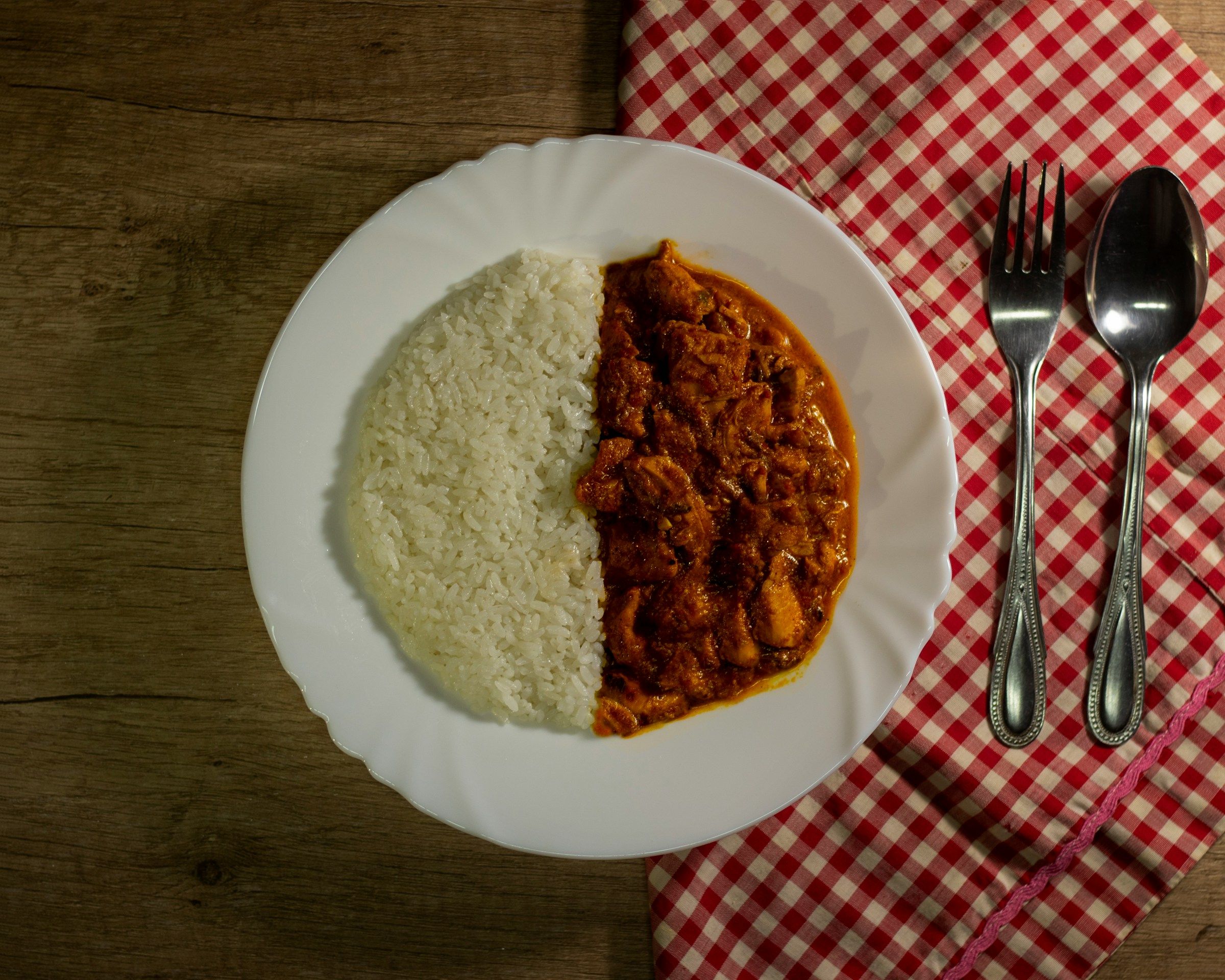


Eating a plant-based diet can be incredibly rewarding but comes with unique challenges. New vegans’ most common issues are getting enough protein, fiber, and micronutrients. Understanding vegan macros and how to track them can make a world of difference in achieving a balanced vegan diet. This article will break down vegan macros, explain why they matter, How to Hit Your Macros and help you hit your targets for a healthy and effective vegan diet that supports your fitness and wellness goals. Calorie tracking can also help you achieve your macro goals more manageably.
Goldi AI’s calorie tracker is one of the best tools for tracking the calories and nutrients you’re getting from your food. With its easy-to-use interface, this app can help you achieve a balanced and effective plant-based diet that supports your fitness goals.
Can Vegans Count Macros?
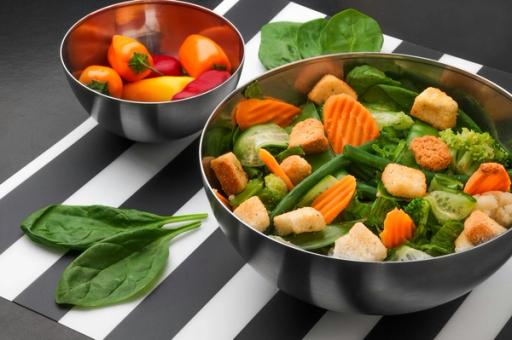
Vegan diets exclude meat, poultry, fish, and dairy. Instead of eating these familiar protein sources, a vegan diet relies on plants for nutrition. Plants contain multiple macronutrients, including:
- ProteinCarbs
- Fat
This can make achieving specific macro goals on a vegan diet tricky. But with some understanding and practice, you can achieve these goals.
What Exactly are Macros?
The term macros refers to macronutrients, the building blocks of every food we eat. The three macronutrients in our diets are:
- Fat
- Carbs
- Protein
They provide our bodies with energy and allow us to exist by aiding in all bodily functions, directly or indirectly. Most foods contain at least two, but often all three macronutrients in differing ratios. Counting macronutrients has long been practiced in the fitness industry as a way to burn:
- Fat
- Gain muscle
- Optimize training and recovery through diet
Plant Plate
The traditional food plate stacked with meat, grains, and veggies looks slightly different from a plant-based regimen.
Vegan Protein
It’s commonly stated that vegans don’t get enough protein in their diet or that they need more protein than meat-eaters. And you may be asking yourself, “How much protein do I need on a vegan meal plan?”
Regardless of whether you are eating meat or not, your protein needs are strongly guided by your:
- Activity level
- Health
- Fitness goals
- Total calorie intake
The trouble with plant-based sources is that they are typically also a source of carbohydrates or fat. Nuts contain protein and a significant amount of fat, and while beans are a good source of protein, they are also reasonably carb-heavy.
Plant Plate
This is the case with almost every plant-based protein you can think of. There is much debate over the quality and absorbability of plant protein compared to animal products.
Vegan Protein Absorption
Some plant-based proteins are less bioavailable for absorption by the body than meat and dairy. This argument stems from the Protein Digestibility Corrected Amino Acid Score (PDCAAS), which was adopted by the Food and Agriculture Organization of the United Nations (FAO) to measure protein quality and solve world hunger.
Since then, it has been used as an indicator of protein quality. Looking at the PDCAAS, one would assume that up to 30% of plant protein can be missed due to poor digestibility. The FDA requires nutrition labeling to correct this. What you see on the label is what you get.
Carb Cycling on a Vegan Diet
Because carbohydrates come from anything that grows from the ground, plant-based diets tend to be very carb-heavy. This can be great for supporting high performance, but not so great when you are looking to burn fat by cutting or decreasing your carb intake during rest periods.
If you are choosing a protein source that is also carb-heavy, you will need to adjust your starch portions accordingly and choose non-starchy veggies or low-carb fruits.
Protein Sources
While beans and quinoa provide an excellent protein combo, to get to 30 grams, you will also be taking in over 600 calories and 100 grams of carbs, compared to 30g of protein from grass-fed steak, which is less than 200 calories and 0g of carbs.
To help counteract some of this, you can always choose your starch as a source of protein. Non-starchy veggies and low-carb fruits should fill the remainder of your plate to add nutrition without too many carbs or additional calories.
Healthy Fats for Vegans
You may have noticed that fat is not mentioned in the plates above. What gives? Fats are typically used as a topping or are already naturally occurring in some foods, so there isn’t a need to add a designated portion at each meal. You probably have little trouble getting enough fat into your day.
But this could also be an opportunity for a small protein boost with:
- Nuts
- Nut butter
- Seeds
- Nutritional yeast
Smart Fats
If you are looking to control calories, fat is an easy way to cut without removing too much volume. A little bit of fat is essential for satiety and nutrient absorption. Here is a good rule of thumb: If your food is cooked with fat, like olive oil, or naturally contains fat from foods like olives, nuts, seeds, and avocado, you probably do not need to add any additional fat.
If you are eating lean with steamed veggies and plain starches, add a little fat that also gives a little protein boost.
Vegan Macros Made Easy
It is possible to get all the nutrients your body needs and be a macro-counting machine while still staying vegan. Like any diet plan, optimizing your nutrition requires understanding and self-education. As you know, your calorie and macro needs are better, so portioning your food gets easier.
How To Calculate Vegan Macros In 5 Easy Steps!

1. Calculate Your Total Daily Energy Expenditure (TDEE)
To calculate your macros, determine your Total Daily Energy Expenditure (TDEE), the total number of calories your body burns daily. Several factors influence your TDEE, including your:
- Body weight
- Age
- Activity level
TDEE is the sum of your:
- Basal Metabolic Rate (BMR)
- Average Activity Burn per Day
Energy Needs
BMR is the calories required to keep your body functioning at rest. Your Average Activity Burn per Day is the number of calories you burn daily from activities like:
- Walking
- Cleaning
- Weightlifting
- Anything else that gets you moving
To calculate your TDEE, you simply add up your BMR and Average Activity Burn per day.
Calculate Your Basal Metabolic Rate (BMR)
BMR calculations aren’t exact, but we will do our best to determine your TDEE based on your:
- Physical characteristics
- Lifestyle
- Fitness goals
Let’s calculate your BMR. There are three widely used formulas in metabolic literature:
- The Harris-Benedict equation
- The Mifflin-St Jeor equation
- The Katch-McArdle equation
Calculate BMR
You can just use the Katch-McArdle calculation. The equation is simple, and it gets the job done. BMR = 370 + (21.6 x LBM), where LBM is your lean body mass in kilograms. To calculate your Lean Body Mass (LBM), you must estimate your body fat percentage. The easiest way to estimate your body fat percentage if you have no idea what it might be is to look at pictures of people whose body fat percentages you know and make an educated guess.
Contrary to popular belief, biometrical impedance analysis isn’t very accurate. If you have results from one of these tests, use that body fat number instead. But for our macro calculation purposes, these tests aren’t necessary.
Calculate Your Average Activity Burn Per Day
Your energy balance each week, total calories consumed vs. total calories burned, is essential in achieving your fitness goals, such as:
- Cutting
- Maintaining
- Bulking
Your daily energy balance can vary slightly if consistent over long periods. Average energy balance over time matters most in achieving your fitness goals. Don’t sweat the small dietary road bumps. We all have them.
Activity Burn
To calculate your Average Activity Burn Per Day, list:
- All the activities you do during a typical week
- How much time you spend doing them
After you list your total activities, we will calculate the calories you burn from each activity. When calculating the activity burn, use MET (Metabolic Equivalent) data for physical activities from The Compendium of Physical Activities Tracking Guide by B. E. Ainsworth.
MET Value
Each activity from a database of hundreds of activities has a MET value associated with it. A MET value represents the ratio of energy, like calories, required to perform a particular activity relative to your BMR.
The macronutrient calculator estimates your calorie burn by multiplying the MET value for your chosen activity by the duration of your activity and by your calculated BMR. We aim to determine our Total Daily Energy Expenditure (TDEE), so we need to know how many calories we burn daily from activity.
Calculate TDEEYour Average Activity Burn per Day is the average number of calories you burn each day from your total exercise per week (your Total Activity Burn per Week divided by 7). We now know our BMR and Average Activity Burn per Day. We simply add these two numbers together to arrive at our TDEE.
This isn’t an exact science, but it is much more accurate than the online macro calculators that use general activity multipliers.
2. Determine Your Main Fitness Goal
Most people I know want to both shred fat and gain more muscle. You cannot shred fat and gain muscle simultaneously unless you are a newbie weightlifter. Doing so would violate the 3 Principles of Body Composition. To maximize muscle growth, you must maintain a caloric surplus. To shred fat, you must maintain a caloric deficit.
The 3 Principles of Body Composition
There are three foundational principles when it comes to building muscle and shredding fat that are well established both scientifically and anecdotally:
- A caloric surplus is necessary for maximizing muscle growth.
- A caloric deficit is necessary for shredding fat.
- A high-protein diet is vital for maximizing muscle growth and minimizing muscle loss while shredding fat.
Caloric Deficit For Shredding Fat
You must burn more energy than you consume to achieve meaningful fat loss. This is called a caloric deficit (consume less calories than you burn). Eating very little, known as starvation dieting, isn’t ideal for weight loss. If your caloric deficit is too extreme, your metabolism will slow, you will lose muscle and fat, and you’ll hate the process.
Caloric Surplus for Muscle Growth
Contrary to shredding fat, you must consume more energy to achieve meaningful muscle growth. This is called a caloric surplus (consume more calories than you burn). You will struggle to gain muscle if you don’t eat enough calories. A caloric deficit:
- Decreases your body’s ability to synthesize skeletal muscle proteins
- Reduces anabolic hormone levels while increasing catabolic hormone levels
- Impairs workout performance,
This impairs progression in your:
- Workouts
- Muscle growth
Bulking Surplus
When bulking, you should maintain a slight 10% caloric surplus. To be in the sweet spot for gaining lean muscle, you should eat around 110% of your daily energy expenditure.
It is also worth noting that most gym newbies with less than a year of weightlifting training under their belts can build muscle and lose fat simultaneously, but they can’t do both simultaneously. Do best by alternating between cutting and bulking periods.
So Which One Should You Pick?
Here’s my rule of thumb: If you are a male with a body fat percentage greater than 15%, you should cut it down to 8-10% before beginning to bulk (gain muscle). If you are a female with a body fat percentage greater than 25%, you should cut it down to 18-20% before beginning to bulk.
If you are a male around 8-10% body fat or a female around 18-20% body fat, then you’re ready to begin a lean bulk.
Lean Start
Starting to build muscle with a shredded physique is ideal for several reasons:
- High body fat levels reduce insulin sensitivity, thereby suppressing muscle protein synthesis (MPS, which is a vital component of hypertrophy, the muscle growth process).
- High body fat levels create hormonal imbalances, causing testosterone levels to drop and estrogen levels to rise in men.
- Bulking from a shredded physique until you reach 15% body fat as a man or 25% as a woman, then cutting back to 8-10% or 18-20%, respectively, saves you from long, grueling cuts.
3. Determine Your Daily Calorie Target
This step is easy now that you have determined your primary fitness goal. If you decide to shred fat, you should aim for a 20% caloric deficit daily. Multiply your TDEE by 0.8 to determine how many calories you should eat daily for fat loss. If you are shredding and your TDEE is 2,568 calories, your Daily Calorie Target should be 2,054 calories per day (2,568 calories x 0.8) to burn fat efficiently. If you decided to start a lean bulk right now to build muscle, you would aim for a 10% caloric surplus every day.
Lean Bulking
If you also want to lean bulk, multiply your TDEE by 1.1 to determine how many calories you should eat daily. If I stopped shredding and began a lean bulk, I should aim to eat 2,825 calories (2,568 calories x 1.1).
4. Calculate Your Vegan Macros
Macronutrients, often called “macros,” are substances required in large amounts in the human diet. The human body needs three primary macronutrients to function properly:
- Carbohydrates
- Fat
- Protein
Regardless of the source, 1 gram of protein contains 4 calories, 1 gram of carbohydrates contains 4 calories, and 1 gram of fat contains 9 calories.
Calculate Your Protein Target
According to U.S. and Canadian dietary reference intakes, the recommended daily allowance for protein for healthy adults is 0.36 grams per pound of body weight (0.8 grams per kilogram of bodyweight).
This amount is “the average daily intake level sufficient to meet the nutrient requirement of nearly all [~98%] of healthy adults.” This recommendation is straightforward to meet as long as you eat a calorically sufficient diet.
Protein Needs
Many decades of research and anecdotal evidence prove that athletes, particularly those who lift heavy weights regularly, need more protein than the average person. The truth is that we can’t tell precisely how much protein you need. Only expensive nitrogen balance testing can tell you for sure. Regarding fitness, people tend to fall into one of three groups. As the scientific literature stands right now, if you are serious about putting on as much muscle mass as possible and want to be safe in terms of consuming enough protein to promote that muscle growth, 0.9 grams of protein per pound of bodyweight for bulking and 1.1 grams per pound of lean body mass (LBM) for cutting is recommended.
Sufficient Protein
Remember that my recommendation is likely more than anyone needs to maximize muscle and strength gains, especially for people without serious physique or strength goals.
Calculate Your Dietary Fat Target
You should only consume enough fat to maintain optimal health. Eating more fat wouldn’t necessarily harm your health, but it would limit the amount of carbohydrates you could eat, which form the bulk of nutritious foods like:
- Whole grains
- Legumes
- Fruits
- Vegetables
Generally speaking, replacing carb calories with fat calories makes it more difficult to build:
- Muscle
- Strength
Fat Loss
Lower carb intake equals:
- Lower insulin response
- Less energy during workouts
Still, many so-called experts claim that eating dietary fat is the key to losing body fat. This couldn’t be further from the truth. A caloric deficit and high protein consumption are the best ways to lose fat.
Fat Facts
A 2015 study by scientists at the National Institutes of Health found that calorie-for-calorie, low-fat dieting is more effective for fat loss than low-carb dieting. Free fatty acids, which come from excess dietary fat and circulate in the bloodstream, cause:
- Inflammation
- Oxidative stress
- Insulin resistance in our muscles
Fat builds up in their muscles within two hours, and insulin sensitivity drops when people are put on a low-carb diet. It is recommended that they consume enough dietary fat to maintain optimal health.
Calculate Your Carbohydrate Target
By this point, you should know your Daily Calorie Target and the number of grams of protein and fat you should eat daily. To calculate the grams of carbs in our macros, we will calculate how many calories we have left in our Daily Calorie Target after subtracting protein and fat calories, and divide by 4 because there are 4 calories in a gram of carbs.
To determine the number of calories you spend each day on protein, multiply your grams of protein by 4 because a gram of protein contains 4 calories.
Macro Math
If you’re aiming for 185 grams of protein per day, you should be consuming 740 calories of protein per day (185 grams x 4 calories per gram).
To determine the calories you spend each day on fat, simply multiply your grams of fat by 9 because are 9 calories in a gram of fat. Since I aim for 57 grams of fat per day, this means I should be consuming 513 calories of fat per day (57 grams x 9 calories per gram).
Carb Count
Your Daily Calorie Target is 1,973 calories per day. To determine the number of calories you have left for carbs, subtract your protein and fat calories from your Daily Calorie Target. Your carb calories = 2,054 – 740 – 513 = 801 calories. Divide your carb calories by 4 (there are 4 calories per gram of carbs), and you have your total carb macros. You should eat about 200 grams of carbs daily (801 calories divided by 4). Now, you know what your calories and vegan macros should be to achieve your main fitness goal!
5. Track and Adjust (Here’s How to Stay on Track)
Once you’ve calculated your macros, the next step is tracking what you eat. This doesn’t have to be a chore. Apps like Cronometer or MyFitnessPal simplify it. Here’s what to do:
Log your meals for a week: Pay attention to your protein, carb, and fat intake. Check your progress. After 7 days, ask yourself:
- Am I hitting my protein target?
- How’s my energy level?
- Is my weight trending in the direction I want?
How to Adjust
If you’re feeling sluggish or low energy, increase your carbs slightly. If you’re feeling bloated or heavy, reduce fat. If you’re not seeing progress, adjust your calories by 100-200 per day and reassess after another week. This process isn’t rigid. It’s about learning what works for your body and tweaking as needed.
Track Your Calories within Less Than 15 Seconds with Our Calorie Tracker App
Tracking vegan macros can help you optimize your nutrition for health, performance, and recovery. If you’re an athlete, tracking your vegan macro intake can help you figure out how to fuel your body for:
- Optimal performance
- Recovery
If you’re transitioning to a vegan diet for health reasons, tracking your vegan macros can help you boost your nutrition to make you:
- Feel better
- Achieve your health goals
Personalized Nutrition
It’s also important to note that no two vegan diets are alike. Everyone has unique preferences, goals, and nutritional needs, and tracking macros can help you personalize your diet. An athlete will have different macro requirements than a vegan to improve their health. Tracking vegan macros can help you optimize your nutrition for:
- Health
- Performance
- Recovery
The Best Way to Track Vegan Macros
Goldi AI transforms calorie tracking with our cutting-edge AI technology. Just snap a photo of your meal, and we’ll do the rest. Our app combines your phone’s depth sensor with advanced AI models to:
- Analyze food volume
- Identify ingredients
- Instantly calculate calories, protein, carbs, and fat content
Effortless Tracking
With 90 percent accuracy on visible foods and multiple tracking options like:
- Barcode scanning
- Food label recognition
- Manual description for complex items like smoothies
Gone are the days of tedious manual logging calorie tracking apps. Whether you’re scanning a full meal or a quick snack, Goldi AI gives you accurate nutritional information in under 15 seconds. Our AI learns from your feedback, continuously improving its accuracy.
Smart Tracking
Stay on track with personalized insights and smart reminders Goldi AI makes achieving your fitness goals simpler than ever. Track your calories with your camera with Goldi AI’s AI calorie tracker today.